Changing cracks
Widening or displaced foundation or basement-wall cracks, particularly when the wall itself appears to move.
A foundation inspection can document visible cracks, structural movement, floor-support issues and moisture conditions. It may help determine whether additional investigation is warranted, but it does not automatically mean your home needs repair.
If you're noticing changes around your house, this guide explains what an appropriate independent professional may check, how to prepare and which questions to ask.
Publisher disclosure: Tri-Cities Foundation Repair Help is an independent homeowner information and referral website. We do not inspect or repair homes.
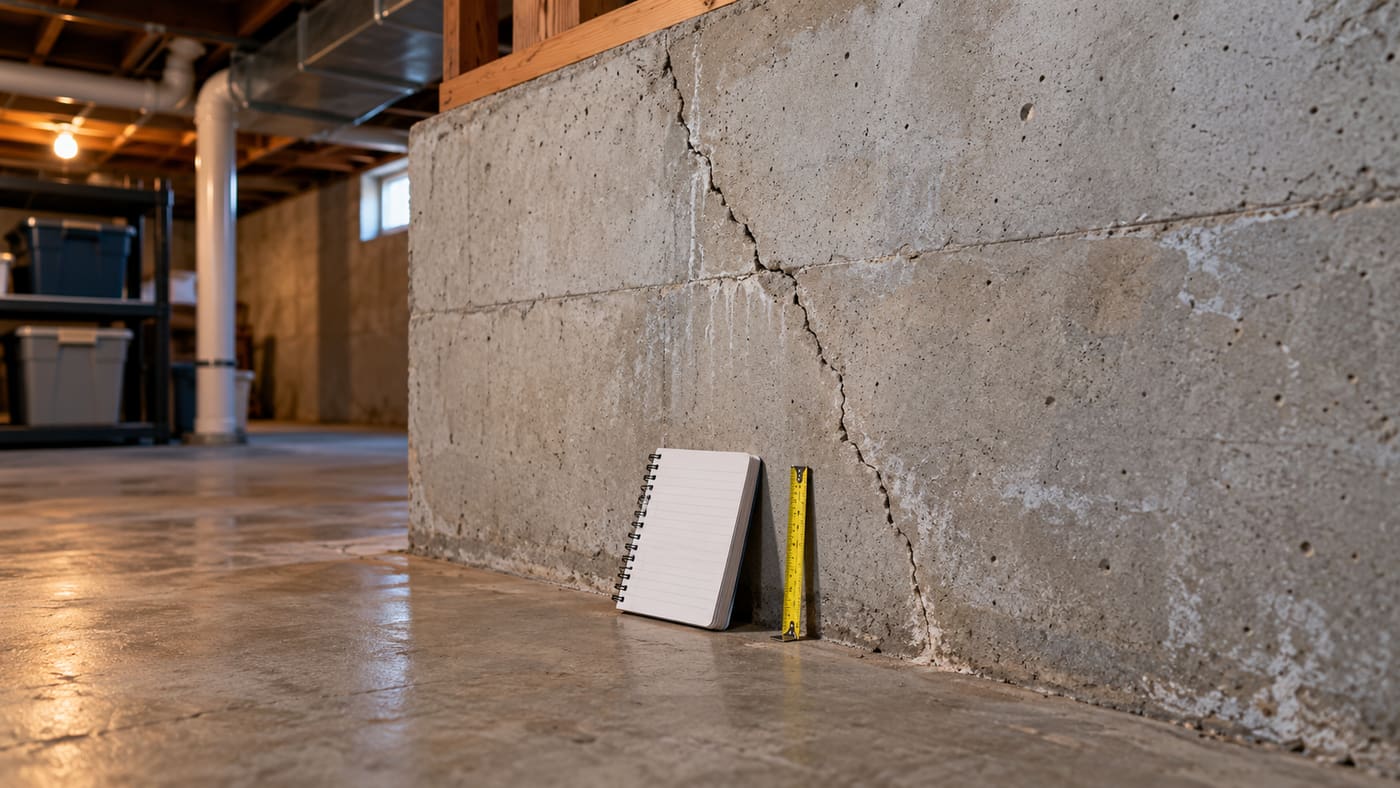
It is an evaluation of a home's foundation and connected structural components for signs of damage, movement or inadequate support. Depending on the professional and the agreed scope, it may include cracks, wall alignment, sloping floors, beams, columns, moisture and drainage.
The goal is to identify visible conditions that warrant attention, not to assume a repair is necessary. Sometimes the findings point to ordinary material changes, floor framing or drainage rather than a foundation defect.
The HUD Residential Rehabilitation Inspection Guide offers historical technical background on examining existing residential structures. It is not a property-specific diagnosis or a current local building code.
A small crack or sticking door does not, by itself, prove foundation movement. Pay more attention to changes that appear suddenly, grow worse or occur together.
Widening or displaced foundation or basement-wall cracks, particularly when the wall itself appears to move.
Uneven or sagging floors that may involve a foundation, joists, beams or interior supports.
Several openings becoming hard to close, especially alongside new gaps or nearby wall cracks.
Leaning basement walls, new separation around masonry or porches, or visibly deteriorated crawl-space supports.
Stay clear of rapidly shifting walls, unstable supports, collapsing ground or unsafe crawl spaces. If there is an immediate danger, leave the affected area and contact appropriate emergency services. Do not wait for a routine inspection or attempt your own structural repairs.
The visit may begin with questions about what changed and when. The scope depends on the foundation type, symptoms, access and the professional's engagement.
Visible masonry, exposed foundation walls, porches, steps and runoff paths may help explain a concern.
The pattern of several changes may be more informative than a single mark on a wall.
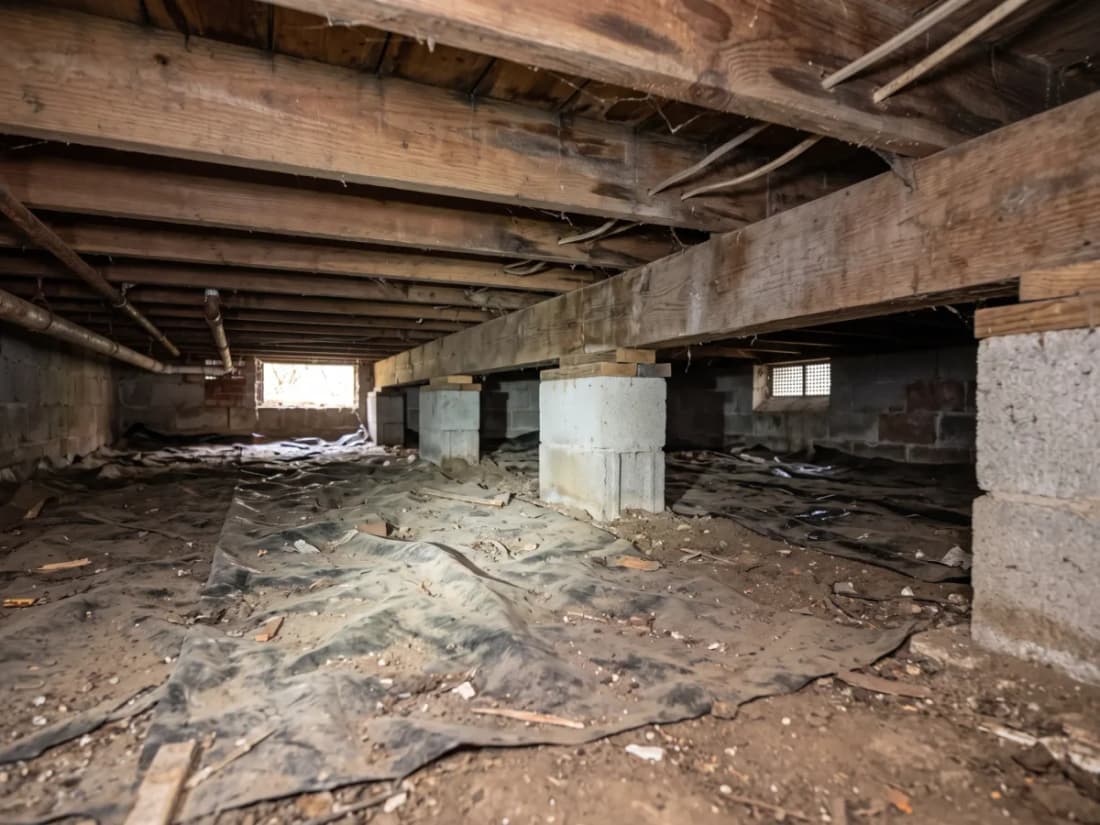
Accessible structural components beneath the house may help separate foundation concerns from floor-framing problems.
Some evaluations record cracks and relative floor elevations or use photos to document visible conditions.
Without a basement or crawl space under the living area, an evaluator may rely on visible slab cracks, relative floor changes, exterior drainage and other accessible evidence. Specialized testing or engineering review may be recommended where appropriate.
Standing water, exposed electrical hazards, unstable supports or blocked access can limit a visit. The ASHI Standards of Practice describe accessibility and safety limitations for general home inspections. A specialized evaluation may have a different scope.
Noticing widening cracks, uneven floors or movement? Call to ask about available independent foundation repair help in your area. This is not an inspection-booking service.
Free independent referral service. Provider availability varies; we may receive compensation for qualifying referrals. A call does not guarantee an inspection, appointment, provider connection or repair.
These roles can overlap in what they observe, but they are not interchangeable. Ask who will perform the evaluation, why and what type of written findings you will receive.
| Professional | What they may do | Important distinction |
|---|---|---|
| Foundation repair contractor or evaluator | Reviews foundation concerns and may describe repair work the company provides. | Recommendations may reflect the services the business offers, not an independent engineering opinion. |
| Licensed professional engineer with relevant structural expertise | Can assess structural behavior and provide engineering analysis within a defined engagement. | Subsurface testing and unrelated home systems may still be outside the agreed scope. |
| Tennessee-licensed home inspector | Provides a broader visual review of accessible home systems, including visible structural components. | A general home inspection is not a substitute for engineering services or concealed-condition testing. |
Consider a separately engaged engineer with relevant expertise when substantial wall movement is suspected, the cause of settlement is unclear, professionals disagree, or a repair decision needs independent structural analysis. Ground or subsurface questions may require a geotechnical professional.
The Tennessee Department of Commerce and Insurance explains that a general licensed home inspector visually examines structural components but is not required to provide engineering services. Confirm appropriate licenses using the Tennessee state license search , and ask about relevant insurance before hiring.
A useful preparation checklist does not require entering unsafe areas or buying specialist measuring equipment. Your observations and earlier records can help explain the issue.
Describe what changed rather than diagnosing it. For example, say the hallway floor has developed a noticeable dip, not that the entire foundation is sinking.
Do not disturb structural materials or enter a hazardous crawl space to prepare.
What you receive depends on the professional and the agreed scope. Tennessee-licensed general home inspections include a written report. A specialized contractor visit or engineering assessment may produce different documentation.
| Report detail | Why it matters |
|---|---|
| Areas examined | Which visible locations and components were evaluated |
| Observed conditions | What cracks, movement, deterioration or moisture were actually seen |
| Measurements and photos | The documentation collected, if included in the scope |
| Limitations | Areas that were inaccessible, unsafe or not assessed |
| Professional opinion | What the assessor believes the evidence may indicate |
| Next steps | Whether monitoring, additional evaluation or other action may be appropriate |
Visible cracks do not always reveal what lies below the slab or soil. A useful explanation distinguishes what was observed, what is suspected and what still needs investigation. The professional may recommend monitoring, engineering analysis or ground investigation.
Not always. An older sloping floor may have stayed the same for years. Without earlier measurements, a single visit may not show when movement began or whether it is still active. Ask whether follow-up monitoring would help.
Rainwater paths, slopes, grading, construction and underlying materials can vary substantially between individual properties. Regional information is background, not a diagnosis.
Read our Johnson City soil and foundation guideThe National Weather Service reports 43.97 inches of average annual rainfall at the Tri-Cities regional climate station for 1991–2020. This is not the measured rainfall at any particular house. Yard slopes, downspouts and water collecting near the foundation may matter more for a specific concern.
The EPA recommends fixing leaks and seepage and directing water away from buildings.
The U.S. Geological Survey documents solution cavities in limestone beneath portions of the Johnson City and nearby mapping areas. That does not mean a given house has an underground cavity, unstable soil or foundation damage.
If unusual settlement or suspected ground instability arises, a geotechnical professional or qualified geologist may be appropriate. A visual foundation inspection cannot identify every concealed subsurface condition.
Questions to clarify before arranging or relying on any foundation evaluation.
No. A general home inspection visually reviews multiple accessible systems, including structural components. A focused foundation evaluation addresses specific concerns. Neither automatically includes an engineering assessment.
An accessible, safe crawl space may reveal floor joists, beams, support columns, walls and moisture conditions. Unsafe or blocked areas may be excluded. Ask what the visit includes before arranging it.
No. Soil testing and geotechnical investigation are separate services that may be recommended if ground instability or unusual settlement is suspected.
An appropriately qualified professional may assess its position, pattern, displacement and relationship to other symptoms. A visual visit may not establish the cause or detect concealed conditions.
A general home inspection can inform a purchase decision. If significant structural concerns appear, consider a separately scoped evaluation by an appropriate professional before making a decision.
A professional may find no visible evidence of significant movement. That does not rule out concealed problems or conditions outside the agreed inspection scope. Ask whether monitoring or further evaluation is justified.
If cracks are widening, floors are changing or supports appear damaged, start by documenting what you observe and seeking an appropriate professional evaluation. No single symptom proves your foundation needs repair.
Learn more about foundation repair methods or how independent repair referrals work. Read our referral terms and disclosure before making contact.
We are an independent homeowner information and referral publisher, not a foundation inspector, engineer or contractor. Independent providers perform any separately arranged work, and homeowners should verify licensing and insurance. We do not perform, warrant or guarantee services. Qualifying referrals may generate compensation. Provider availability varies.
Calls do not guarantee an inspection, appointment, connection, referral or repair.