How Do Soil and Ground Conditions Affect Foundations?
A foundation depends on the ground beneath it for support. If that ground settles unevenly, loses material through erosion, or changes in ways that affect its ability to support the structure, parts of the home may move.
Moisture can also affect the soil surrounding foundation walls. Depending on the property, changes in drainage, soil behavior, or ground pressure may contribute to cracking and other structural problems.
However, not every crack or uneven floor comes from the soil. Damaged floor supports and ordinary movement in building materials can create similar symptoms. The important thing is understanding what's happening at your property.
Ground Conditions That May Affect a Foundation
| Ground or site condition | How it may affect a home | What to watch for |
|---|---|---|
| Uneven soil settlement | Different parts of the foundation may move | New cracks, gaps, or sloping floors |
| Moisture-sensitive soil | Changes in moisture may affect soil behavior | Movement or cracking that needs investigation |
| Limestone and underground openings | Certain locations may have complex subsurface conditions | Unusual ground depressions or settlement |
| Sloping ground | Runoff may travel toward foundation walls | Erosion, pooling water, or basement dampness |
| Poor grading or drainage | Water may remain near the structure | Standing water or recurring seepage |
| Settling soil around the house | Low spots may develop beside foundation walls | Water collecting where the ground has sunk |
These conditions offer clues about what may need investigating. They can't tell you exactly what's happening beneath a particular home.
Noticing new cracks, sticking openings or uneven floors? Our guide to foundation warning signs explains which changes are useful to document.
What Kind of Soil and Rock Are Found Around Johnson City?
Johnson City doesn't have one uniform soil type beneath every neighborhood. Soil texture, drainage, depth, and underlying rock can vary from one property to another. Some locations may have relatively shallow bedrock, while others have deeper soil or ground that was changed during construction.
The USDA Natural Resources Conservation Service explains that soil surveys can identify characteristics such as drainage, slope, soil properties, and depth to bedrock. These differences matter because a foundation needs suitable support from the ground directly beneath it, not simply the general soil conditions reported for the city.
1. Soil Texture and Moisture Changes
Soil contains different amounts of sand, silt, clay, and other materials. Those ingredients influence how it holds water, drains, and responds to changing conditions. Some clay-rich soils, for example, can swell as they absorb moisture and shrink as they dry. Other soils may have different concerns, including drainage limitations or erosion.
That doesn't mean every Johnson City property sits on highly expansive clay.
Can Wet Soil Cause Foundation Movement?
Under certain conditions, changing soil moisture can contribute to movement or increase pressure against foundation walls. Imagine a downspout that empties beside the same corner of a house after every storm. The ground there may stay wetter than the rest of the yard.
If new cracks appear near that corner, the drainage and supporting ground are worth investigating together. The water may be relevant, although an evaluation is needed to establish whether the foundation has moved.
2. Limestone and Underground Ground Conditions
Soil isn't the only part of the picture. The bedrock beneath it can matter, too. The U.S. Geological Survey has documented limestone containing solution cavities in parts of the Johnson City mapping area. Solution cavities are openings that can develop when groundwater gradually dissolves certain types of rock.
Areas shaped by this process are often described as karst terrain. Karst landscapes may contain underground openings, sinkholes, depressions, and other features associated with soluble bedrock.
Does Limestone Mean Your Home Is at Risk of a Sinkhole?
Not necessarily. Regional geologic information doesn't tell you whether a cavity exists beneath a particular house. Even nearby properties can have different subsurface conditions.
The Tennessee Emergency Management Authority identifies sinkholes and other ground movement as potential geologic hazards in Tennessee.
Warning Signs to Look For
- New ground depressions that appear or continue getting deeper
- Cracks in the ground that develop suddenly
- Unusual settlement around a house or attached structure
- Rapid structural changes accompanied by visible ground movement
These symptoms can have different causes. They aren't automatic evidence of a sinkhole. If the ground appears to be collapsing or a new opening develops near your home, keep people away from the area and seek prompt professional assistance.
How Rainfall and Drainage Affect Johnson City Foundations
Rainfall is another reason to pay attention to the ground around your home. According to the National Weather Service, the Tri-Cities regional weather station has a normal annual rainfall of approximately 44 inches, based on the 1991–2020 climate period.
That's a regional climate figure, not a measurement for every Johnson City property. For homeowners, the more practical question is where the water goes after it reaches the ground.
1. Water Collecting Beside Foundation Walls
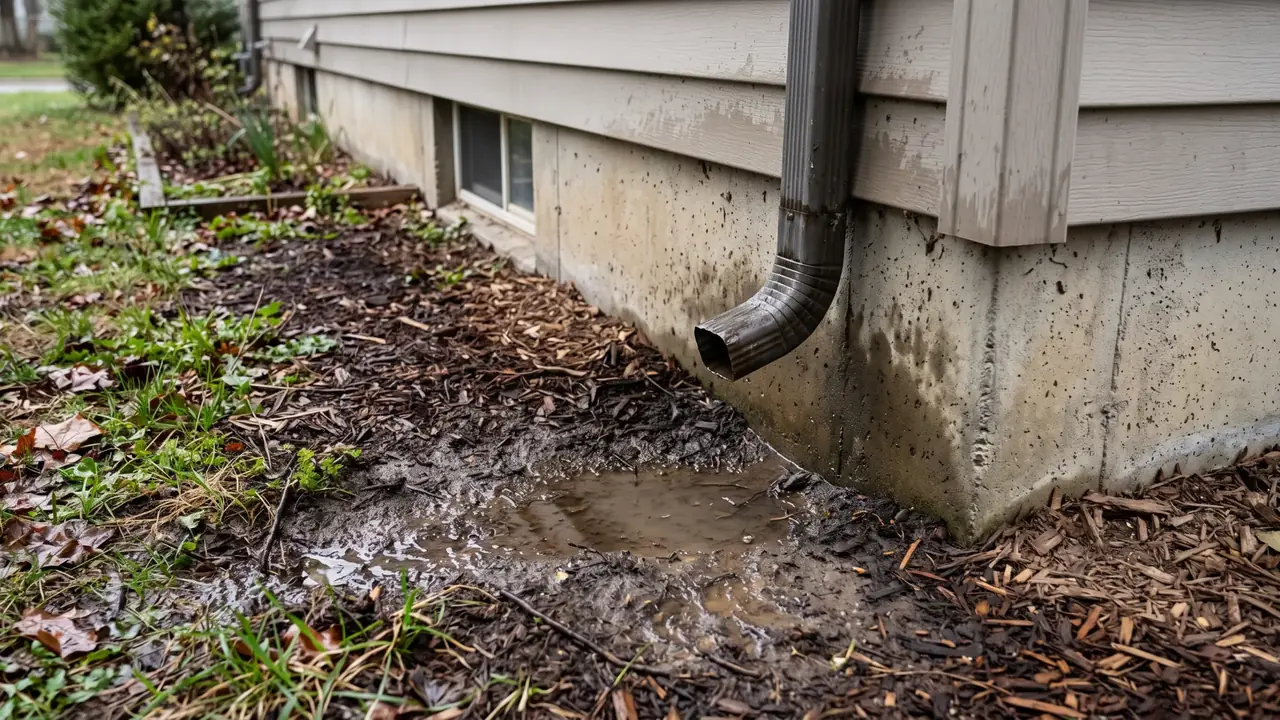
Consider a backyard with a low spot near the basement wall. After heavy rain, water collects there instead of flowing away. If a nearby gutter overflows or a downspout empties into the same area, the puddle may grow larger.
Recurring moisture can contribute to seepage and unfavorable conditions around foundation walls. The U.S. Environmental Protection Agency recommends addressing leaks and seepage and ensuring that ground drainage slopes away from buildings.
Warning Signs to Look For
- Standing water beside the foundation after rain
- Overflowing gutters releasing water near the house
- Downspouts discharging directly beside foundation walls
- Recurring basement dampness or water seepage
- Soil erosion or washed-out areas near the structure
These conditions deserve attention even if you haven't noticed foundation movement.
2. Sloping Yards and Hillside Properties
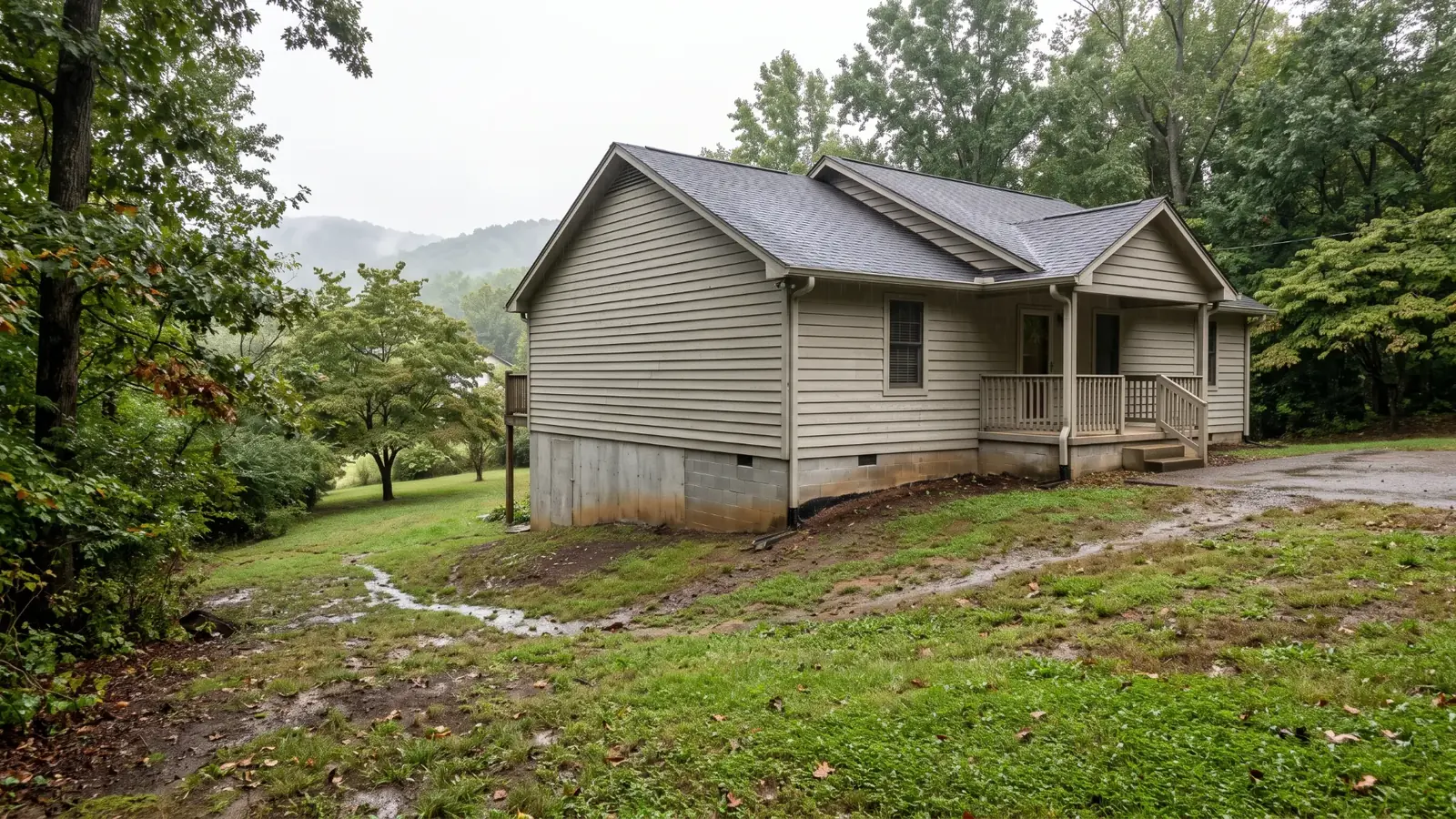
Slopes influence how water travels across a property. If your house sits below part of the yard, rainwater may move toward the foundation unless the grading and drainage direct it elsewhere.
A steep yard isn't automatically a problem, though. A nearly level property can also have drainage trouble when water collects in low spots.
How a Yard's Slope Can Affect Drainage
Picture a driveway that slopes toward one corner of the garage. During a heavy storm, runoff follows the pavement and collects beside the wall. Or maybe the side yard slopes toward a basement stairwell, sending water into an area where it has nowhere to drain easily. The concern isn't simply how steep the land is. It's where the water ends up.
Johnson City's zoning standards for development include drainage and erosion-control provisions. These address site development rather than diagnosing existing foundations, but they show why managing stormwater is an established local planning concern.
What About Retaining Walls and Erosion?
On some properties, retaining walls help support soil where the ground changes elevation. If a wall begins leaning, nearby soil washes away, or cracks develop, the cause should be evaluated.
A retaining-wall problem doesn't automatically mean the house foundation has the same issue. They may be separate structures, although ground conditions and drainage can affect both.
3. Settling Soil Around the House
The soil immediately beside a foundation may be different from the undisturbed ground farther into the yard.
During construction, soil is often excavated and later placed back around the foundation. This material is commonly called backfill. Backfill can settle over time, leaving shallow depressions near the house.
For example, you might notice that the flower bed beside a basement wall has gradually sunk below the surrounding lawn. After rain, water begins collecting in that low area.
This may be settlement of the surrounding soil rather than the foundation itself. An evaluation should distinguish between changes in the landscaping and actual structural movement.
How Ground Conditions Affect Different Foundation Types
The type of foundation matters because ground and moisture conditions don't affect every house the same way.
1. Slab Foundations
- A slab foundation includes a concrete slab at or near ground level.
- If the supporting ground changes or the slab moves, cracks and uneven areas may develop.
- An evaluation may involve checking the slab, its edges, the underlying support, and nearby drainage.
Keep in mind that concrete shrinkage and other conditions can also cause slab cracks without ongoing foundation settlement.
2. Basement Foundations
- Basement walls are partly or fully below the surrounding ground.
- Conditions outside those walls can affect moisture intrusion and, in some situations, pressure acting against the structure.
- A small, stable surface crack is different from a horizontal crack accompanied by visible wall movement.
- Drainage may be part of the concern, but correcting runoff alone won't necessarily stabilize a wall that's already bowing.
3. Crawl-Space Foundations
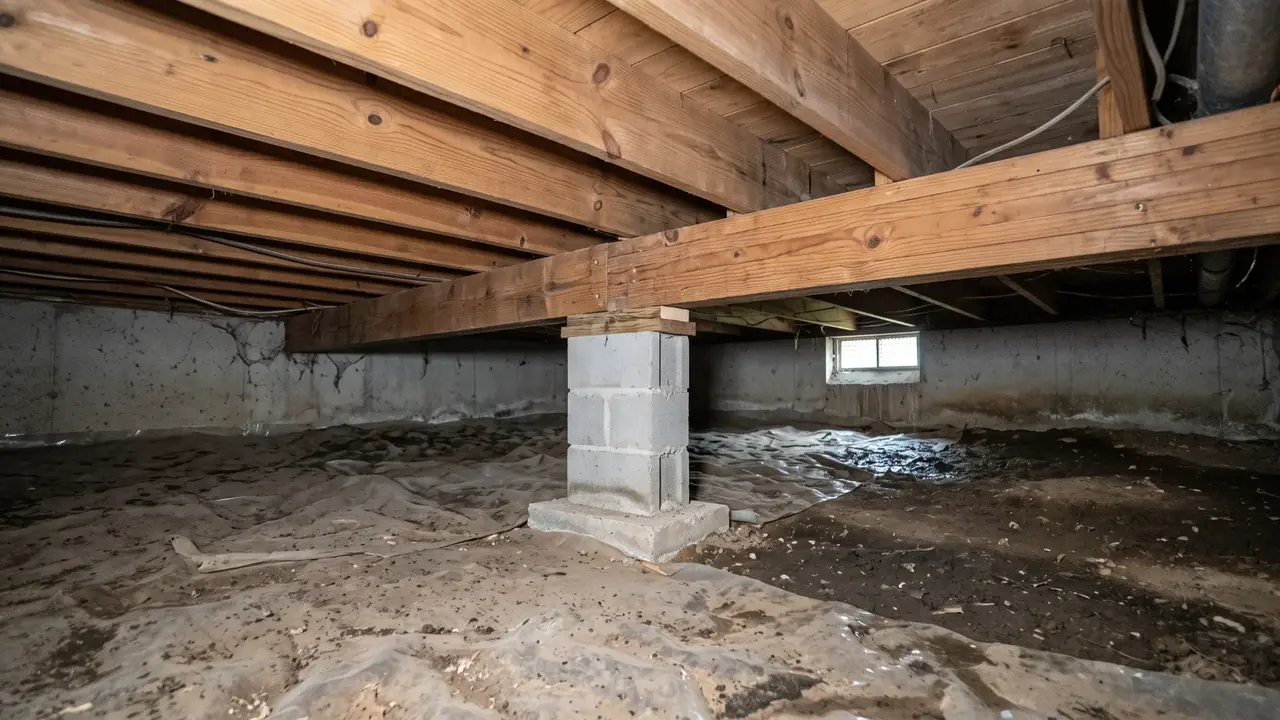
- Crawl-space homes have floor framing and structural supports beneath the living area.
- Moisture entering from the ground, exterior drainage, or other sources can affect conditions beneath the house.
- If wooden beams or floor joists deteriorate, or support columns shift, the floors above may begin to sag.
- The EPA's moisture-control guidance also discusses limiting moisture entering from exposed soil in crawl spaces.
- If you notice sagging floors along with damp or musty crawl-space conditions, both the moisture source and the supporting structure should be checked.
How Can You Tell if a Problem Is Related to Soil or Drainage?
Homeowners usually notice the visible symptom before they understand the cause. The table below can help you understand what an evaluation may need to investigate.
Common Symptoms and What They Mean
| What you notice | What may need investigating | What it doesn't prove |
|---|---|---|
| Water pooling beside the house | Grading, gutters, and drainage | That the foundation has settled |
| A depression forming near a wall | Settled backfill, erosion, or ground movement | That an underground cavity exists |
| Basement cracks that keep growing | Settlement, wall movement, or structural conditions | That one particular soil type is responsible |
| Floors beginning to sag | Foundation support, beams, joists, or columns | That the supporting soil has failed |
| A retaining wall starting to lean | Soil pressure, drainage, and wall condition | That the house foundation is also moving |
| Sudden ground cracking or collapse | Possible ground instability or a geologic hazard | The exact type of subsurface problem |
Concerned About Possible Foundation Movement?
Noticing cracks, uneven floors or drainage problems around your Johnson City home? Call to ask about available independent foundation repair help in your area. Provider availability and a connection are not guaranteed.
(866) 661-0846
What Can Johnson City Homeowners Check Around Their Property?
A few observations, particularly after rain, can help you recognize drainage conditions and changes worth discussing with a professional.
A Simple Homeowner Checklist
- Look for low spots near the house. Notice where water collects beside foundation walls.
- Check gutters and downspouts. See whether roof runoff is being directed away from the building.
- Watch where rainwater travels. Pay attention to driveways, walkways, and yards that channel water toward the house.
- Look for erosion. Note washed-out soil, new channels, or changes around retaining walls.
- Photograph cracks and gaps. Keep pictures of visible changes in foundation walls, masonry, or nearby surfaces.
- Notice crawl-space moisture symptoms. Musty odors, damp materials, or sagging floors may need further evaluation.
- Keep older photographs. Comparing images taken from similar positions can help show whether a condition has changed.
What to Notice After Heavy Rain
- Suppose a puddle forms beside the same basement wall after several storms.
- Take a photograph from a safe spot, note where the water is coming from, and see whether the area remains damp after the rest of the yard has dried.
- If you later notice seepage inside the basement, those observations may help an inspector understand the problem.
- Don't enter flooded crawl spaces, approach unstable slopes, or dig into suspected ground depressions. If the ground or structure appears unsafe, leave the investigation to a qualified professional.
How to Check Soil Conditions for Your Johnson City Property
If you're curious about the soil mapped around your home, the USDA Web Soil Survey is a useful place to start.
How to Use the USDA Web Soil Survey
- Open the USDA Web Soil Survey.
- Find your property on the map and select an Area of Interest.
- Open the Soil Map tab to view mapped soil types and descriptions.
- Use the Soil Data Explorer to review available properties and interpretations.
Depending on the area, the information may describe:
- Soil texture and drainage
- Slope and landscape position
- Depth to bedrock or other restrictive layers
- Other characteristics relevant to land use
What a Soil Map Can't Tell You
A soil survey isn't the same as testing the ground beneath your foundation. The property may have been graded, filled, excavated, or otherwise changed after the soil information was collected. Conditions can also vary within a mapped area.
The USDA notes that on-site investigation is necessary for certain engineering applications. Use the survey to understand general soil conditions, not to decide whether your home has foundation damage or needs a particular repair.
When Should You Have Foundation or Ground Conditions Evaluated?
Standing water near the house is different from a foundation wall that's visibly moving. Both deserve attention, but they don't necessarily require the same investigation.
Warning Signs That Deserve Professional Attention
Consider an evaluation if you notice:
- Foundation cracks that are widening or showing displacement
- New or worsening slopes in the floors
- Basement walls that bow or lean
- Repeated water intrusion alongside structural changes
- Unusual ground depressions or possible settlement
- Erosion affecting areas close to structural supports
If the ground suddenly collapses or a structural element appears unstable, stay away from the affected area and seek urgent professional or emergency assistance as appropriate.
What Might a Professional Evaluation Include?
- Depending on the symptoms, an evaluation may involve checking foundation walls, floor supports, drainage, slopes, and visible ground conditions.
- Measurements can help identify whether different parts of the structure have moved.
- If the concern involves unusual ground settlement, possible underground openings, or complicated soil conditions, a geotechnical professional or qualified geologist may be needed.
- An independent structural engineer may also be helpful when substantial movement is suspected or professionals disagree about its cause.
- For an overview of structural stabilization methods, see our Foundation Repair Methods and Services guide.
Frequently Asked Questions
Does Johnson City Have Clay Soil That Can Affect Foundations?
Johnson City doesn't have one uniform soil type. You shouldn't assume a house sits on highly expansive clay without information about the actual property. USDA soil mapping can provide a useful starting point.
Are Sinkholes a Concern in Johnson City, TN?
Limestone containing solution cavities has been documented in parts of the Johnson City mapping area. Sinkholes are also recognized geologic hazards in Tennessee. That doesn't mean every Johnson City home is at risk or has an underground opening beneath it.
Can Heavy Rain Cause Foundation Problems?
Heavy rain can contribute to drainage problems and changes in moisture conditions around a foundation. Whether those conditions lead to structural movement depends on the soil, rock, foundation construction, drainage, and other property-specific factors.
Can a Sloped Yard Affect a House Foundation?
If the ground directs water toward the foundation, runoff may collect near the house. Appropriate grading and drainage can help manage those conditions.
Can Fixing Drainage Problems Stop Foundation Settlement?
Improving drainage can address water-related conditions, but it won't necessarily reverse foundation settlement or stabilize an already damaged wall.
The underlying cause needs to be understood before deciding which work is appropriate.
Should I Get a Soil Test if My Foundation Has Cracks?
If an evaluation suggests unusual settlement, unstable ground, or complex subsurface conditions, further geotechnical investigation may be appropriate.
Conclusion
A wet basement wall, a crack near your foundation, or a sloping floor doesn't automatically mean the ground beneath your house is unstable. But if the problem keeps changing or several warning signs appear together, it's worth finding out what's causing them. You don't need to identify the soil type or choose a foundation repair method yourself.
If you're concerned about possible foundation movement at your Johnson City home, you can learn more in our [Johnson City foundation repair overview](/) or use this website's approved contact option to ask about independent foundation repair help.
Know what you are seeing before choosing a repair.
Ask about independent foundation assistance when changing symptoms concern you. Availability and a connection are not guaranteed.
Call for Foundation Help(866) 661-0846
Call to ask about available foundation repair help in your area. Tri-Cities Foundation Repair Help is an independent information and referral website, not a foundation repair contractor. Eligible inquiries may be connected with independent service providers, and we may receive compensation for qualifying referrals. Provider availability and a connection are not guaranteed.
Explore our foundation repair methods guide and foundation warning signs, or review our editorial standards. Return to the Johnson City foundation repair homepage.
Published October 17, 2026. Official regional sources are linked where discussed; they do not establish conditions at a particular property.