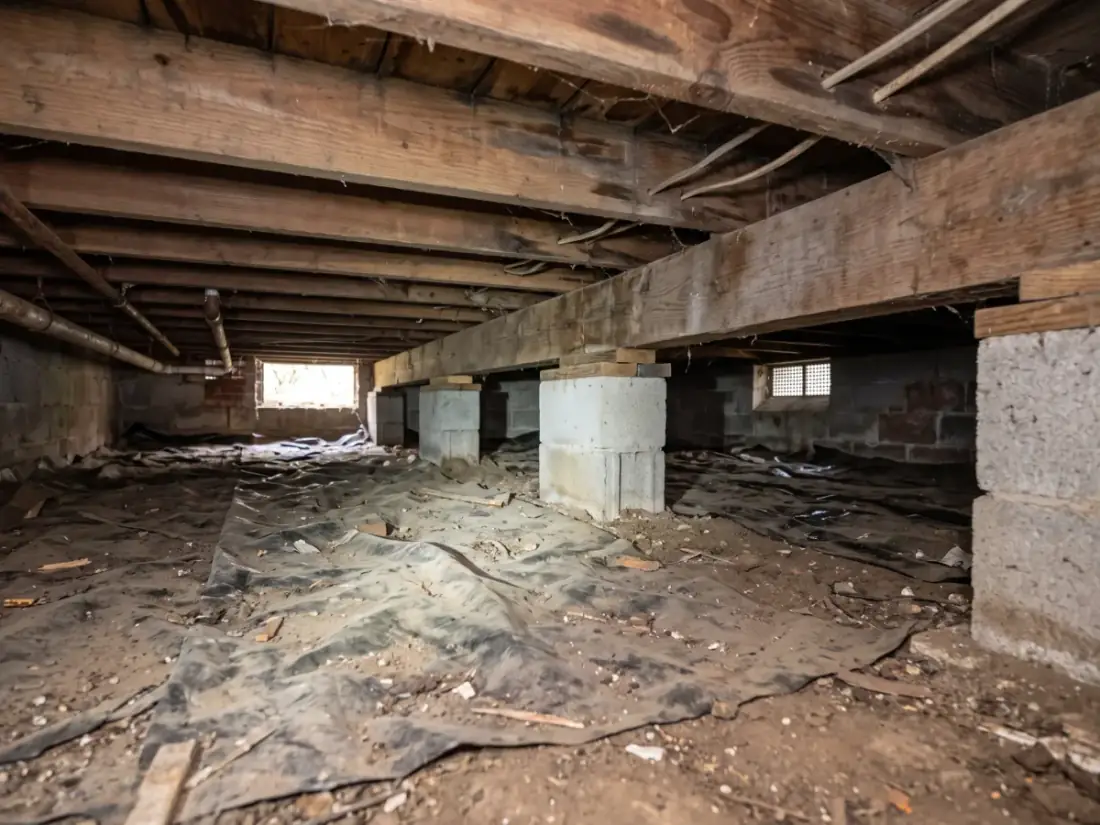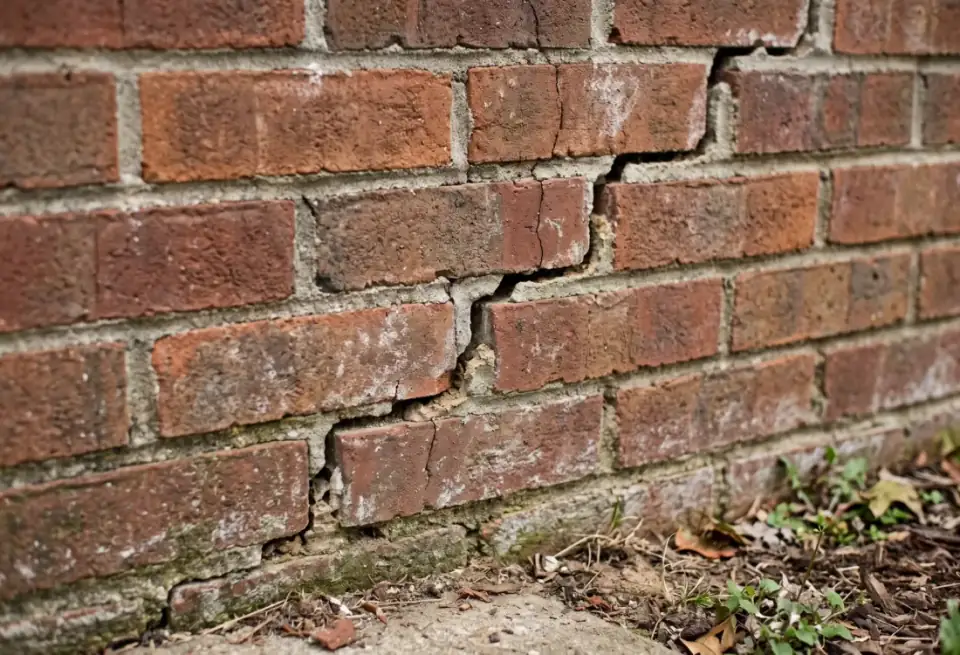
Cracks in Foundation or Basement Walls
Foundation cracks are common, but they don't all mean the same thing. Some form as concrete shrinks. Others may be connected to settlement, pressure against a foundation wall, or movement elsewhere in the structure.
The direction of a crack can provide useful clues, although it can't confirm the cause on its own.
What Different Foundation Crack Patterns May Mean
- Vertical or hairline cracks: These can develop from shrinkage or other material changes. A thin crack that's remained unchanged for years is different from one that's still growing.
- Horizontal cracks: These may be associated with pressure or movement affecting a foundation wall, particularly when the wall is also bowing.
- Diagonal cracks: These sometimes appear when parts of a structure move unevenly.
- Cracks with displaced edges: If one side of the crack has shifted outward or inward compared with the other, the surrounding structure needs closer evaluation.
Pay attention to water entering through a crack, too. Water intrusion and structural movement aren't necessarily the same problem, but both may need attention.
The HUD Residential Rehabilitation Inspection Guide explains how foundation cracking can relate to shrinkage, settlement, and movement in building materials.
When to seek help: Have cracks evaluated if they're widening, visibly displaced, or appearing alongside other changes in the house.